Loading...
Serving La Mesa, CA and surrounding areas. (858) 723-7450
La Mesa's clay soils shift. Its hillside lots add complexity. Its building rules require permits and inspections. We pour concrete footings that account for all of it - from decks and additions to retaining walls and stepped hillside designs.
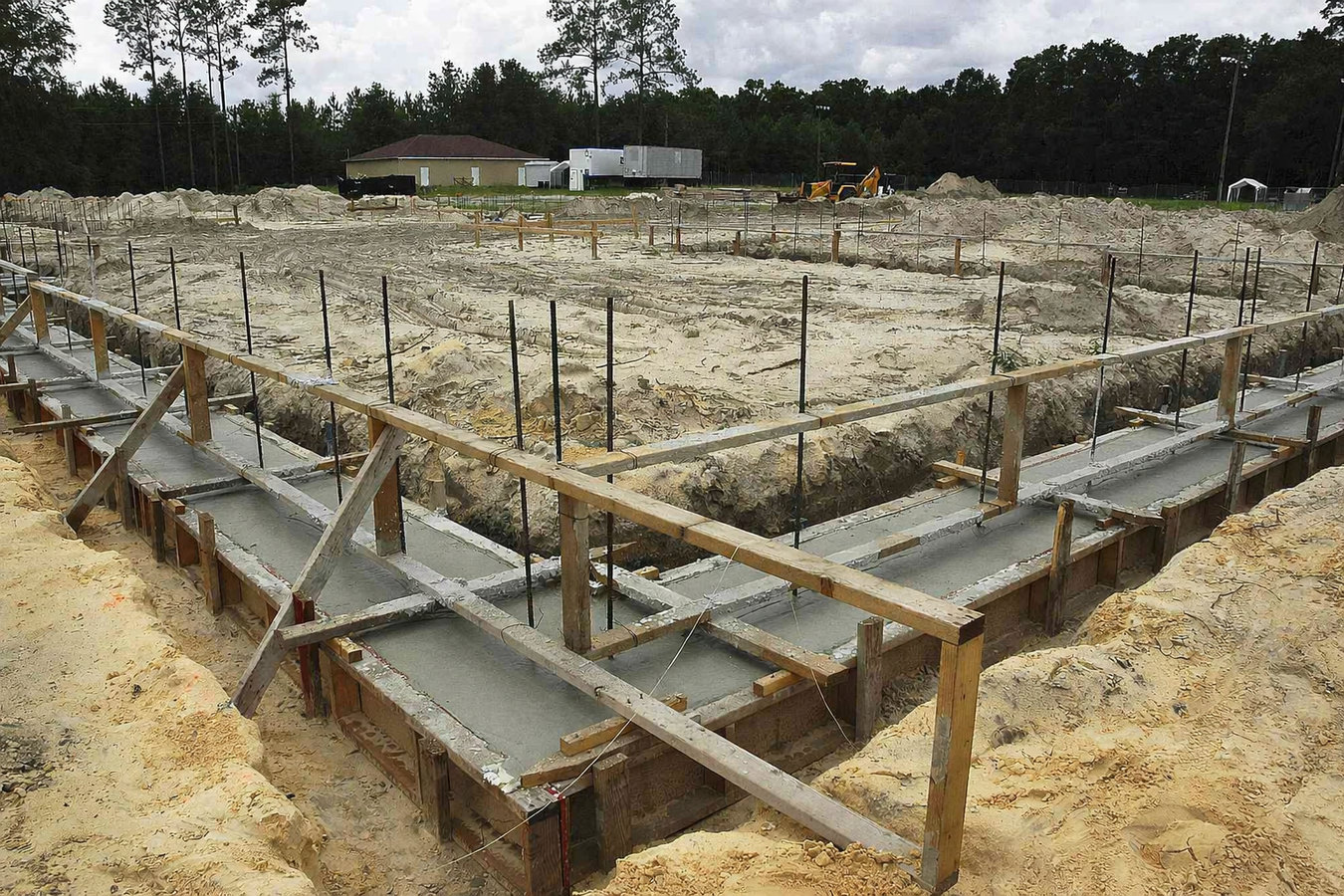
Concrete footings in La Mesa are the buried anchors that hold structures above them - decks, room additions, retaining walls, fences, and covered patios all depend on them. They are dug below the surface to stable soil, reinforced with steel, and poured to the depth and width required for the load they carry. Most residential footing jobs take one to three days of on-site work, plus curing time, plus the permit and inspection process that the City of La Mesa requires before any pour happens.
The reason footings matter so much in La Mesa is the soil. Much of this city sits on expansive clay that swells when the winter rains arrive and shrinks back down as summer dries it out. A footing that was not designed for that movement - too shallow, too narrow, or without enough steel - will shift over time, and whatever sits on top of it will shift with it. If you are planning a new retaining wall alongside your footing project, our foundation installation service covers larger structural work that may pair with your project.
Fixing a footing after the fact is far more expensive than doing it right the first time - because you often have to demolish what was built on top. The permit and inspection process that La Mesa requires is not just red tape. It is the mechanism that puts an independent set of eyes on the excavation and reinforcement before the concrete goes in. You can also verify any contractor's license before hiring through the California Contractors State License Board.
Any new structure attached to or near your home - a deck, covered patio, room addition, or detached garage - almost certainly requires new concrete footings before construction can begin. If a contractor quotes you on one of these projects without mentioning footings or permits, ask about it directly - that is a gap worth understanding before work starts.
If a deck or patio has shifted, tilted, or developed a gap where it meets the house, the footings underneath may have moved. In La Mesa, this is often caused by expansive clay soils shifting through wet and dry cycles over the years. A structure that has moved off its footings is a safety issue, not just a cosmetic one - it warrants a professional assessment.
Retaining walls that develop horizontal cracks, lean forward, or show gaps at the joints are often telling you the footing underneath is no longer doing its job. La Mesa's hillside lots put retaining walls under real stress, especially after heavy winter rains when saturated soil pushes against the wall. A crack that is widening over time needs attention before the wall fails entirely.
A fence post that keeps leaning despite being reset is usually a sign the concrete footing around it has cracked, heaved, or deteriorated. This is especially common in older La Mesa neighborhoods where original fence work may be 30 or 40 years old. Replacing the footing - not just resetting the post - is the fix that actually lasts.
We install concrete footings for the full range of residential projects in La Mesa - deck and patio cover footings, room addition and ADU footings with California seismic reinforcement, retaining wall footings sized for hillside loads and clay soil pressure, and stepped footing designs for sloped lots where a flat-depth approach would not work. Every project starts with a site assessment, because soil type, slope, and what the footing is supporting all change what the design needs to look like. If your project also involves structural foundation work beyond individual footings, our foundation raising service addresses larger settling and leveling needs across your property.
We handle the permit application to the City of La Mesa Building Division and coordinate the required pre-pour inspection - so you are never in a position where work has to stop because paperwork was not filed correctly. Before any excavation begins, underground utility lines are marked through California's free dig-safe service. For technical standards on concrete footing design, the American Concrete Institute publishes guidelines that inform how reputable contractors approach this work.
Suits homeowners adding a new deck or patio cover who need buried, inspected anchors sized for the load and La Mesa's soil conditions.
Fits room additions, ADUs, and attached structures requiring engineered footings with seismic reinforcement per California's building requirements.
Designed for new retaining walls or wall replacements where the footing must anchor against hillside pressure and expansive clay movement.
The right approach for La Mesa's sloped properties where flat-depth footings are not possible and the footing must step down the grade.
Two conditions make La Mesa footing work more demanding than the national average: expansive clay soils and seismic zone requirements. Clay soils throughout the La Mesa and East San Diego County area absorb water and swell, then dry out and pull back - a cycle that happens every year through the wet winter and dry summer. Footings that were not sized and reinforced for that movement show the effects within a few years: cracked walls, tilting decks, posts that lean despite being reset. Homeowners in La Mesa deal with this regularly, particularly in neighborhoods where the original construction dates to the 1950s and 1960s.
The seismic requirements add a second layer. California's building code requires footings in this region to include steel reinforcement sized and placed to handle lateral earthquake forces - more steel, more precise placement, and an inspector who verifies it before the concrete is poured. These are not optional requirements. On La Mesa's hillside lots, stepped footing designs add a third variable: the footing must step down the grade at different depths, which makes the excavation harder and the forming more complex than flat-ground work. Nearby communities like Spring Valley face the same slope and soil conditions - our crews work across all of East County.
We ask about the size of the project, what it is supporting, and whether you have had soil or drainage issues in the area. We schedule a free on-site visit before giving you a written estimate - be cautious of any contractor who quotes a firm price without seeing the property.
We measure the area, assess soil and slope conditions, then prepare and submit a permit application to the City of La Mesa Building Division on your behalf. Permit approval typically takes a few days to a few weeks - we give you a realistic timeline and keep you updated. Replies to inquiries typically happen within one business day.
The crew digs trenches or holes to the required depth, sets wooden forms, and places steel reinforcement inside. The city inspector verifies the excavation and reinforcement before any concrete is poured - this step is what protects you and ensures the work is on record.
Once the inspector signs off, concrete is poured and the surface leveled and finished. The concrete needs at least seven days to cure before any significant load is placed on it. After curing, forms are removed, the area is backfilled and cleaned up, and the footings are ready for the next phase of your project.
Free on-site estimate. Written scope before any digging starts. Permit and inspection handled for you.
(858) 723-7450Expansive clay is the norm in La Mesa, and footings that ignore it fail within a few years. We dig to the correct depth and use the reinforcement and sizing needed to handle the ground movement that comes with every wet season - not the minimum that might squeak through an inspection.
California requires footing reinforcement for seismic forces in this region, and we build to that standard on every project. The city inspector verifies reinforcement before the pour - so you have an independent confirmation the work was done correctly, not just our word for it. See the California Building Standards Commission at dgs.ca.gov/BSC for code context.
A meaningful share of La Mesa's residential lots are sloped, and hillside footing work - stepped footings, harder excavation, more complex drainage - requires hands-on experience. We do this work regularly and can tell you upfront what a sloped lot adds to the scope and cost, not after we are already on site.
We apply for the permit, coordinate the required inspection before the pour, and get you the permit number so you have documentation on file. Unpermitted footing work is a problem at resale and with insurers - permitted work is an asset. We do not skip this step and we do not ask you to.
Footing work is not glamorous - you will not see it once the project is done. But it is the part of any structure that determines whether the visible work stands for 10 years or 40. Getting it right in La Mesa means understanding the soil, the seismic requirements, the hillside conditions, and the city's process - and doing all of it before the pour.
Lifting and releveling a settled foundation on La Mesa's hillside and clay-soil properties to restore structural stability.
Learn MoreNew foundation construction for additions, ADUs, and structures that need a complete engineered base from the ground up.
Learn MorePermit timelines add weeks - call today so your project stays on schedule and does not get pushed into the rainy season.